Efficient protection of business operations requires a balance between technology, processes and people. IT tools, clear policies and continuous employee education are the foundation of the protection against cyber threats and help organizations recognize risks in timely fashion, reduce vulnerabilities and ensure continued business operations.



CSOC, as an extension of the internal IT department, provides comprehensive security and detection of cyber threats.
CSOC combines state-of-the-art technology with a team of experienced analysts who monitor infrastructure 24/7, detect threats and react in real time. In a world where attacks occur every few seconds, it is not enough to have functioning software, you need people, processes and systems that work together to prevent damage before it occurs.
With continuous monitoring of events, CSOC additionally assesses the security state of an organization, detects suspicious behavior and neutralizes threats before they compromise data, business operations or company reputation. With advanced analytics, automated responses and continuous expert support, the system becomes more resilient, faster and more prepared for challenges of modern security environment.
Stricter control reduces the risk
By combining Identity and Access Management (IAM) and Privileged Access Management (PAM) solutions, organizations achieve full control over users and administrative privileges. IAM enables centralized identity management throughout the entire employee lifecycle, with clear access policies, multi-factor authentication (MFA), Single Sign-On (SSO), and automated granting and revoking of privileges. At the same time, PAM enforces strict control over privileged access: access is granted only when required, in accordance with the principle of least privilege, and all activities are logged and monitored.
Security information and events in real time, in one place
SIEM collects, evaluates, and analyzes security events from all available sources (network devices, servers, applications, authentication systems, and cloud services). Through advanced analytics and event correlation, it identifies suspicious behavior, generates alerts, and automatically responds to threats. SIEM records attack patterns and detects security gaps. By transparently logging activities and generating reports, it is a key component in meeting legal and regulatory requirements (GDPR, ISO/IEC 27001, NIS2, ZKS).
Prevent unintentional (or intentional) disclosure of confidential information from the organization
DLP (Data Loss Prevention) technology enables the monitoring, control, and blocking of unauthorized transmission of sensitive data within and outside the organization. DLP solutions identify confidential information (personal data, intellectual property, financial documents) and prevent their leakage via e-mail, USB devices, cloud services, and other communication channels.
Find weaknesses in infrastructure before attackers
Vulnerability scanning combined with targeted penetration testing provides a comprehensive view of the security state of IT infrastructure. Scanning identifies known vulnerabilities in operating systems, network services, and applications, while penetration testing simulates real attacks and attempted compromises without actual damage. The result provides insight into the organization’s resilience to attacks, the effectiveness of existing security controls, and areas that require improvement.
Activities within the network under a magnifying glass
NDR solutions enable deep monitoring of activities within network traffic in real time, without relying solely on known threats. Using advanced behavioral analysis and machine learning, NDR identifies anomalies that may indicate the presence of an attacker, even when traditional systems (such as firewalls or antivirus solutions) do not detect the threat. It recognizes key attack signals, such as lateral movement, internal user compromise, network scanning, and privilege escalation attempts.
Cloud applications yes, but not without the knowledge of the IT department
CASB enables organizations to control the use of cloud applications, whether approved (SaaS solutions) or used without the knowledge of IT (so-called shadow IT). CASB provides visibility into all data flows, analyzes user behavior, detects risks, and prevents the leakage of sensitive information outside the organization.
Forgotten, unsupervised or vulnerable components are critical
ASM provides a comprehensive, up-to-date inventory of everything your organization has exposed to the internet. The system not only discovers “forgotten” services and misconfigured instances, but also automatically correlates them with known vulnerabilities and publicly available data (e.g., exposed passwords or certificates). In practice, this means that instead of periodic manual checks, the security team gains continuous, real-time insight into where the organization is most vulnerable, along with clear remediation recommendations.
Prepare in advance
CTI provides in-depth analysis and continuous insight into the development of security threats, including attack techniques, active vulnerabilities, compromised access data, and emerging threats specific to your industry. Information is collected from a wide range of sources, from dark web forums, hacker repositories, and data leaks to public and private security databases. CTI enables organizations to proactively adapt their security policies, focus resources on real threats, and better protect their most critical systems.
Optimal protection includes technology and people
Endpoint protection combines NGAV, EDR, and Device Control technologies for advanced defense of endpoints. NGAV uses behavioral analysis to detect sophisticated threats, EDR enables monitoring and rapid incident response, while Device Control prevents unauthorized access to devices. Together, they provide strong, multi-layered protection of IT systems.
Smart protection of endpoints, 24 hours a day, 7 days a week
Managed EDR (Endpoint Detection and Response) is a defense model that combines sophisticated security tools with continuous monitoring by a team of cybersecurity experts. EDR technology enables detailed monitoring of activities on endpoints (computers, servers), detection of suspicious behavior, and rapid response to threats before they cause serious damage. MEDR goes even further: security analysts actively monitor systems 24/7, analyze suspicious events, prevent attacks in real time, and carry out coordinated response actions, including device isolation, threat removal, and forensic analysis. MEDR reduces attack detection and response time from days to minutes.
Mislead attackers and prevent them from getting real data
Honeypot systems, in the form of digital decoys, are deployed within the IT environment to simulate sensitive or attractive targets such as files, passwords, SSH keys, databases, URLs, or access data. Decoys serve no real purpose and are specifically designed to remain unnoticed until an attacker attempts to exploit them. Once a decoy is triggered, the system automatically generates an alert, providing security teams with early warning of the attacker’s presence, information about the attack method and attempted movement within the network, and time to respond while the real systems remain untouched.
Protect a critical data management system
AD (Active Directory) is one of the most common targets of cyber-attacks as it manages identities and privileges within an entire organization. Detailed monitoring of all changes in AD will alert to suspicious activities, such as attempts at privilege escalation or the deletion of security logs. Compromised accounts and authentication anomalies will not go unnoticed.

The first step in developing a strategy of protection against cyber threats is risk assessment.
AlterRisk GRC is a platform for information system risk management and compliance management according to relevant global standards. EU and Croatian directives and standards are implemented within AlterRisk GRC, which greatly simplifies the implementation of regulations and meeting defined security requirements for companies.
By using AlterRisk GRC, companies can assess their level of security and build a higher level of resilience to risks.

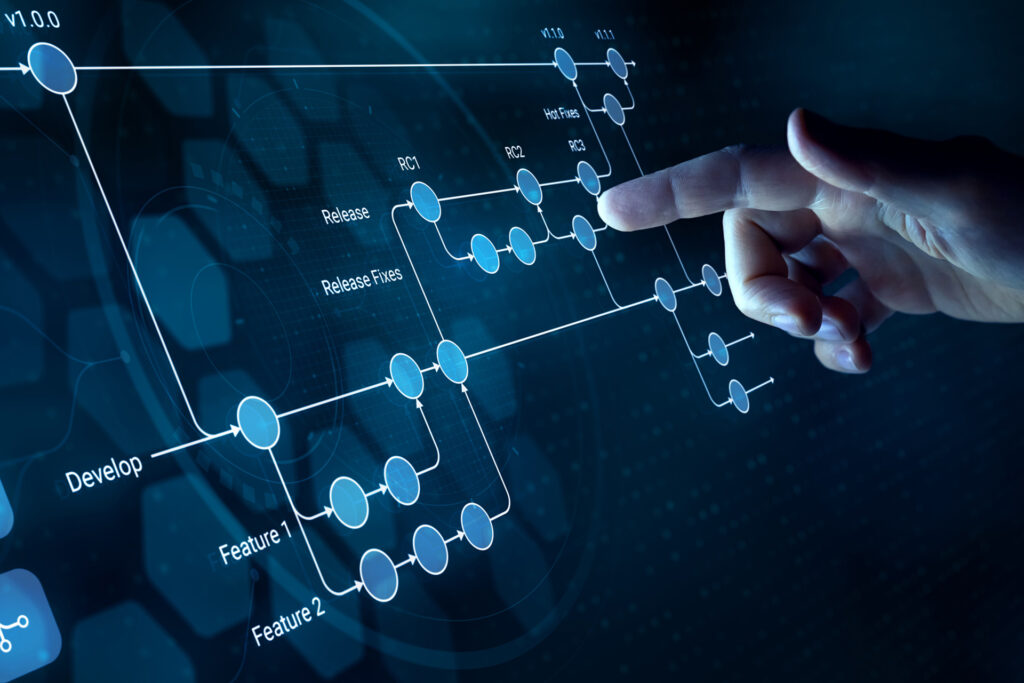
We help define the vision, goals and direction of IT systems development that will keep up with business needs and technological trends. The strategy enables more efficient resource planning, investments and ensures scalability of digital infrastructure.