


In today’s world, the cloud is an indispensable part of digital transformation and business modernization. It offers flexibility, scalability, and access to advanced technologies without massive upfront investments.
However, the journey to the cloud is often paved with questions, doubts, and very real challenges. If you have considered using the cloud, you have likely encountered some of the following questions:
- How do I retain control? You have carefully built and maintained your IT infrastructure for years; you know every part of it. The thought of handing that control over to someone else can cause understandable unease.
- What should I choose? The market is flooded with options – Infrastructure as a Service, Platform as a Service, Software as a Service… In this sea of options, how do you choose the best fit for your applications, data, and overall business?
- How do I avoid vendor lock-in? What if you want to change your service provider or entire IT strategy tomorrow? How much will it cost, and is it even feasible?
- Is my data secure? Security and compliance with regulations like NIS2, DORA, and GDPR are absolute priorities. Is your data truly secure at every moment?
- How much will it cost? Are the costs genuinely predictable? How do you avoid hidden fees and unpleasant surprises on your monthly bill?
- Who will help me when things go wrong? What happens in the middle of the night? Will support understand my problem, my language, and the local context, and be able to react quickly?

Cloud and local infrastructure: how to find the perfect balance?
Global IT trends show that an “all-in” cloud strategy is not always the optimal solution. Organizations are increasingly turning to hybrid and multi-cloud solutions, seeking the ideal balance between private infrastructure and the public cloud. At the same time, data sovereignty and regulatory compliance are more important than ever.
Although cloud adoption is widening, certain situations still require the power and control of local infrastructure.
For environments demanding exceptionally fast reaction times – such as financial trading systems, key real-time production systems, or specific industrial applications – low latency is crucial. Local infrastructure eliminates delays caused by internet communication and long distances between users and their data, ensuring optimal performance.
When it comes to customer personal data, health records, or confidential business information, keeping data within your own data center offers maximum control over security and easier compliance with regulatory requirements like GDPR or HIPAA. You retain complete physical and logical control over data access.
Migrating existing, complex systems to cloud can be extremely expensive and complex. If you have already invested significant resources in local infrastructure and your systems are stable, it is often more cost-effective to keep them where they are.
On the other hand, cloud provides incomparable advantages that have become the foundation of modern digital transformation.
The cloud enables rapid resource adjustment to user needs. It eliminates the need for large initial capital investments (CAPEX) in hardware – you pay only for what you use (OPEX). This is ideal for companies seeking flexibility and the ability to expand operations quickly without great risks.
Applications with variable resource needs, such as those with seasonal peaks or daily traffic fluctuations, are ideal for the cloud. Rapid resource scaling and a pay-per-use model ensure optimal cost-efficiency, eliminating the cost of maintaining unused capacity.
The cloud is the perfect place for development and testing environments. Developers can quickly create new servers or shut down existing ones, experiment with new technologies, and significantly accelerate development cycles, fostering innovation without burdening local infrastructure.
With the explosion of Big Data and Artificial Intelligence (AI), the cloud has become essential as it offers almost unlimited storage and powerful tools for processing large amounts of unstructured data. It is no longer necessary to invest in expensive local infrastructure to leverage the potential of AI and advanced analytics.
Finding the right hybrid model, which combines the power of local systems with the agility of the cloud, is becoming a key strategy for optimizing performance, security, and costs. It is not an “either-or” choice, but a thoughtful integration that utilizes the advantages of both approaches.
And for a successful business transformation strategy and securing a competitive edge, beyond an optimal hybrid model, you only need one more thing: a successful partner.
The cloud market: two worlds, one compromise
In one world, we have global hyperscalers. They offer an exceptionally wide range of services and global presence. However, this complexity often comes with a high and unpredictable price tag; it is difficult for users to estimate variable costs such as outbound network traffic and others. “Vendor lock-in” is a real danger because once you go deep into a hyperscaler’s ecosystem, getting out can be complicated and expensive. Support is often automated, slower, and carries language barriers, while data sovereignty issues – along with regulations like the US Cloud Act – cause additional uncertainty.
In the other world, we have local and regional service providers. Their advantages are proximity, lower latency, and local support. However, their offer is often not “true” cloud, but rather advanced hosting – a virtual private server sharing the same physical or virtual switch with other users’ servers. This often entails lower flexibility, a lack of self-service capabilities, questionable scalability, and lower technological maturity of the platform. Furthermore, the Service Level Agreements (SLA) for such services sometimes do not inspire enough confidence for critical business systems.
A sovereign Croatian cloud for a hybrid future
There is a third direction in the cloud services market that combines the best of global technologies with the benefits of a local partner. Just under 4 years ago, KING ICT recognized this challenge and began building a solution capable of bridging these two worlds – the private data center and the public cloud. Thus, KING Cloud was created – an alternative to existing solutions and a strong option for building a robust hybrid environment.
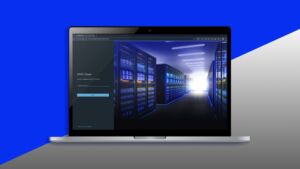
KING Cloud is built on VMware technology, which many business users largely already use in their own data centers. This shared technological foundation enables the creation of flexible and advanced hybrid solutions. It covers a complete spectrum of services – from Virtual Data Center, Cloud Server, Container-as-a-Service, and Object Storage, to advanced business continuity solutions like Backup (BaaS) and Disaster Recovery (DRaaS) services.
A fusion of experience, top-tier technology, and local expertise
Woven into the construction of KING Cloud is more than 20 years of expert experience in designing, implementing, and maintaining the most complex IT systems for the enterprise and public sectors in Croatia and the region.
The KING Cloud platform is built on the solid foundations of reliable hardware from renowned manufacturers and three key technological pillars:
VMware virtualization stack: The industry standard for enterprise cloud and the basis of a multi-tenant platform
VMware Cloud Director (VCD) ensures complete network, logical, and security isolation between users, providing security equal to that of using your own private infrastructure.
VMware NSX: The foundation of network virtualization and security
VMware NSX allows users to create fully isolated virtual networks with advanced functionalities such as firewalls, routing, switching, load balancing, and VPN. NSX ensures an edge gateway for every user – a key firewall and router that controls all traffic entering and leaving the user’s virtual data center. Each user can have multiple edge-gateways, each with its own set of rules for different virtual data centers and can easily configure secure site-to-site VPN tunnels via the management portal.
VMware AVI Load Balancer: An elastic L4-L7 load balancer
The VMware AVI Load Balancer ensures high application availability and security. It includes a Web Application Firewall (WAF), SSL offloading, and virtually unlimited scalability.
Local infrastructure, global standards
KING Cloud infrastructure is currently located in two data centers in Croatia, which meet strict Tier III and Tier IV (ANSI/TIA-942) standards. This guarantees the highest level of availability, redundancy, and, most importantly, data residency – data remains in Croatia, secure and compliant with GDPR and local legislation. Security is further confirmed by implemented ISO certificates: ISO 27001:2022 (information security management), and specific certificates for cloud services, ISO 27017:2015 and ISO 27018:2019.
Key Advantages of KING Cloud
- Cloud on the user’s terms: The user selects the desired depth of management, ranging from complete autonomy via the self-service portal to management by the KING ICT team of top experts.
- No “vendor lock-in”: KING Cloud rests on renowned technologies that are the standard in the business world. Therefore, migration – whether into KING Cloud or out of it – is significantly simpler than with closed hyperscale platforms.
- Predictable and transparent costs: The billing model is clear and transparent, with no hidden costs for network traffic, disk operations, or activity seconds of individual services.
- Top-tier local support: The greatest strength is the KING Cloud team. More than 100 experienced and certified engineers provide fast and expert support in the Croatian language, with a complete understanding of the user’s business and local context. They are available via the KING Service Desk with a 24/7 option.
- A true cloud experience, more than hosting: KING Cloud possesses technological maturity and breadth of offering. Alongside a unique self-service portal for managing all resources, it enables advanced network and security services integrated into the platform and true on-demand scalability.
Want to learn more or see what our portal looks like live? Contact us at cloud@king-ict.eu and visit our portal at portal.king-cloud.eu. We are here to answer all your questions and work together to find a solution tailored to your needs!