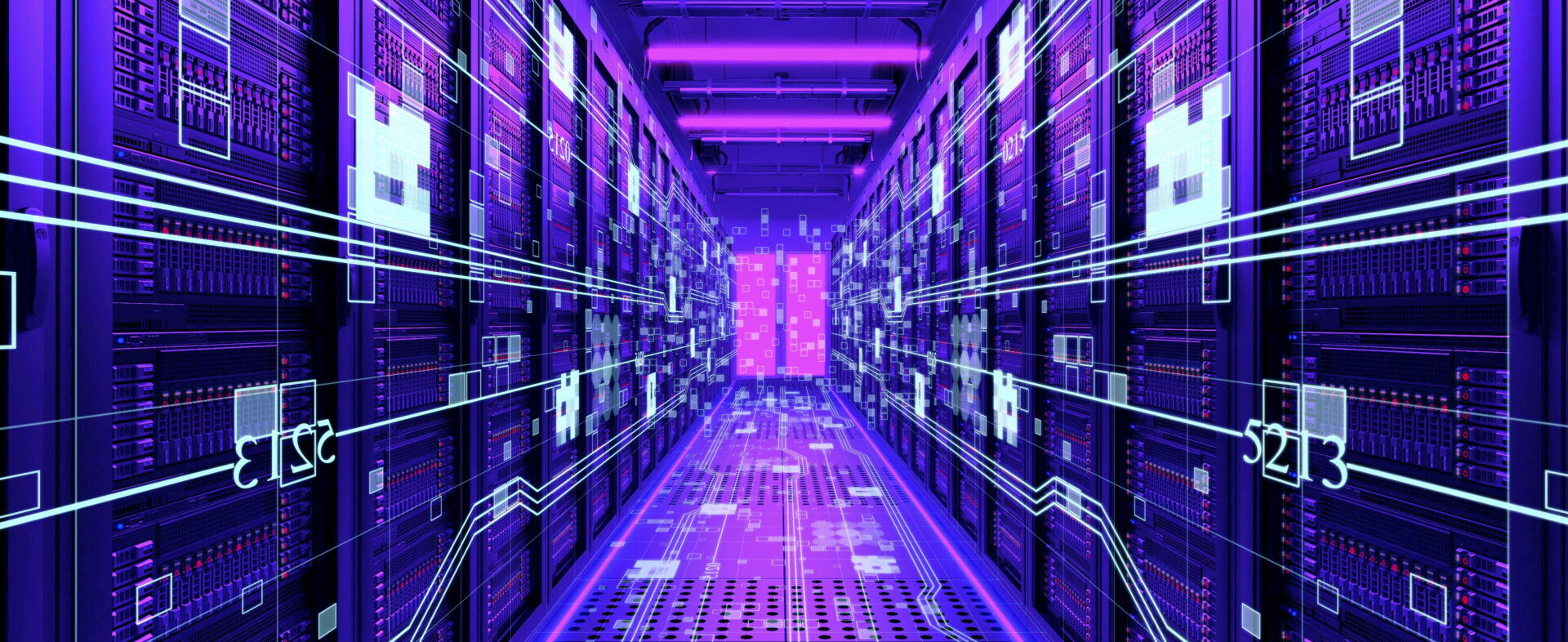



IT infrastructure is the foundation of technological innovation
Before the AI revolution, we witnessed multiple periodic turning points that significantly impacted the development of IT infrastructure. We are talking about virtualization, big data, Kubernetes, cloud, and others, each of which reshaped the architectural landscape of data centers and information systems. As if that were not enough, applications that we maintained and upgraded suddenly became “legacy” (although this in itself does not necessarily have to be negative), and before we knew it, we were all either in or still are undergoing digital transformation and system modernization.
Digital transformation enables companies to improve operations, strengthen competitiveness, and achieve better results. One step further are digital innovations, through which companies further simplify processes in order to create a higher-quality user experience for their customers.
Innovation starts in the data center
Regardless of whether we are talking about cloud, on-premises, or hybrid models, the physical layer must always exist in the data center. Business applications, AI systems, or digitalization of business processes share the same foundation: computer resources, data storage capacity, network connectivity, and many other functionalities. In short – IT infrastructure.
Without stable foundations, even the most advanced IT systems cannot transition from experimentation to real business value.
Organizations that view AI exclusively through the lens of software often overlook the key fact that, without adequate infrastructure readiness, AI projects remain at the pilot stage.
Modern enterprise infrastructure enables the introduction of new systems without destabilizing the existing environment. This is precisely why it is necessary to reassess existing infrastructural capacities, verify data center standardization and available power capacity. New technologies have high energy demands, and it is necessary to select solutions that enable maximum utilization of server resources within the framework of energy efficiency.
AI is a new infrastructure challenge
Unlike traditional applications, AI has more demanding operational foundations than those we have been accustomed to. Artificial intelligence is not just an “application.” It is a specific type of infrastructure workload that:
- heavily utilizes processing power and memory
- often requires acceleration via GPU (Graphics Processing Unit)
- generates and processes large volumes of data
- requires predictable performance and low latency
- demands high throughput to storage systems
- expects dynamic scalability depending on workload
- requires clearly defined isolation and security policies
In addition to technical requirements, there is also a business aspect. Data often must not leave the organization or the territory of the Republic of Croatia. This means that AI solutions must be deployed within the existing data center or a hybrid architecture, with full control over data.
How to choose new infrastructure technologies?
In real-world IT environments, virtualization and containers are a stable foundation of operations, and a large share of business-critical applications runs in virtualized form.
Modernizing the IT environment does not mean “replacing everything,” but enabling the coexistence of existing systems, cloud-native platforms, as well as AI and analytics services.
When selecting new technologies, it is crucial that the decision is not ideological but architectural, without exclusivity toward any particular technology.
In practice, cloud-native means Kubernetes. It brings increased complexity, a different operating model, and the need for a new skillset. At the same time, it enables advantages such as automation, declarative infrastructure management (“infrastructure as code”), and scalability that adapts to workloads. Such environments require a somewhat different way of thinking and additional competencies.
Infrastructure must enable all system layers to operate securely, reliably, and scalably, whether in parallel or integrated with newly introduced layers. This is why data center infrastructure architecture must be designed to support different operating models – from now traditional virtualization and container platforms to systems enhanced with artificial intelligence.
Reliable solutions from Dell Technologies
Modern solutions based on scalable servers and enterprise storage systems enable the introduction of AI systems without destabilizing the existing environment. KING ICT approaches this challenge in partnership with reliable server platforms and flexible storage and network systems. In this way, we ensure that clients have the necessary capacity for gradual modernization while maintaining stability.
Relying on Dell Technologies as a manufacturer of infrastructure equipment, we offer users solutions that provide a stable operating environment for their business systems and applications. This environment includes servers based on the x86 platform, as well as the latest-generation disk storage systems based on NVMe technology.
A proven architecture, a strong knowledge base, and IT experts with detailed knowledge of technology are the foundation for the implementation of AI projects that will enable further business growth and development.
Infrastructure is a strategic decision
The introduction of new platforms and modern digital services is not exclusively a technological project. It is a strategic decision that includes capacity planning, selecting the appropriate architecture, and ensuring long-term flexibility, and this is where we provide support across all phases. Whether it concerns reliable infrastructure and high-performance requirements within the KING Cloud environment or on-premises systems, KING ICT is able to meet the demand.
Organizations that adapt their infrastructure in a timely manner create stable grounds for innovation – whether in applications, process automation, or the implementation of AI solutions within their own data center.
If you have any questions, please feel free to reach out.